
Last updated November 25, 2026
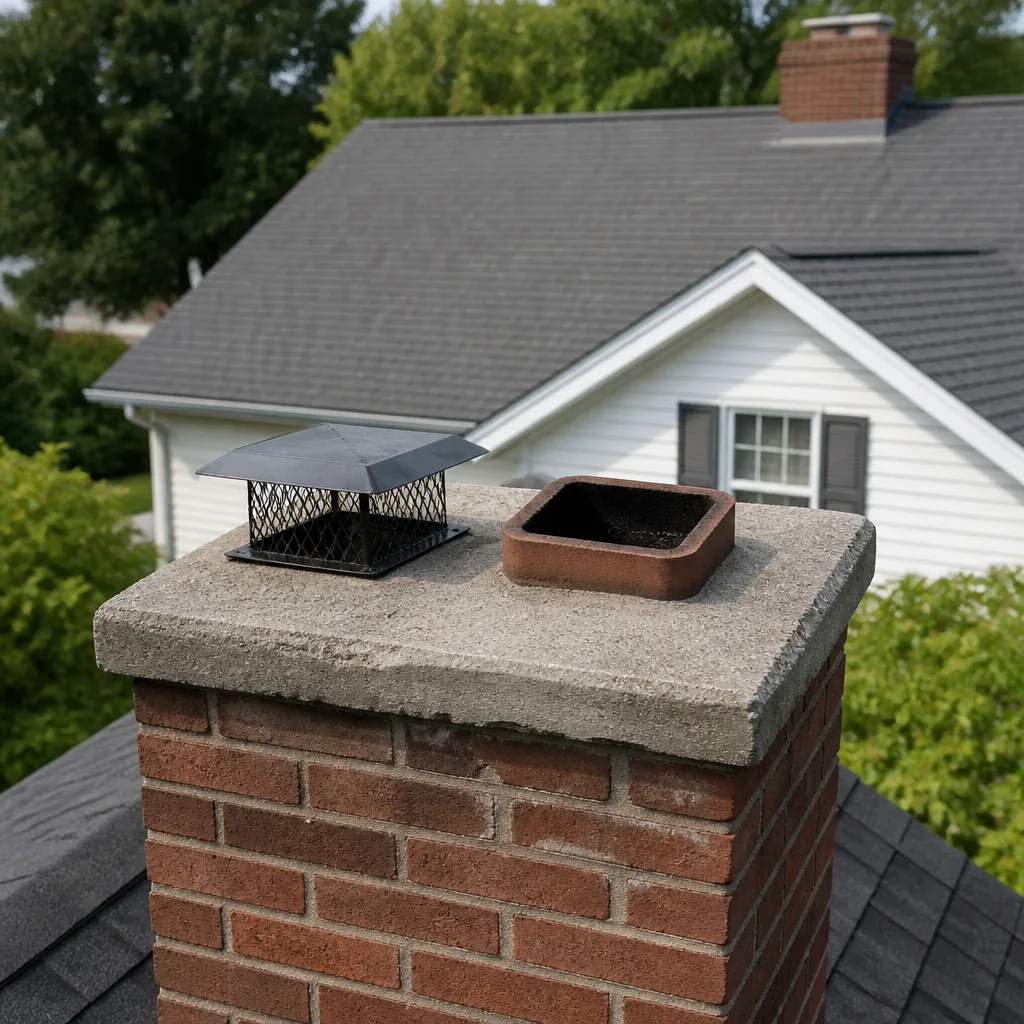 Sweep & inspection
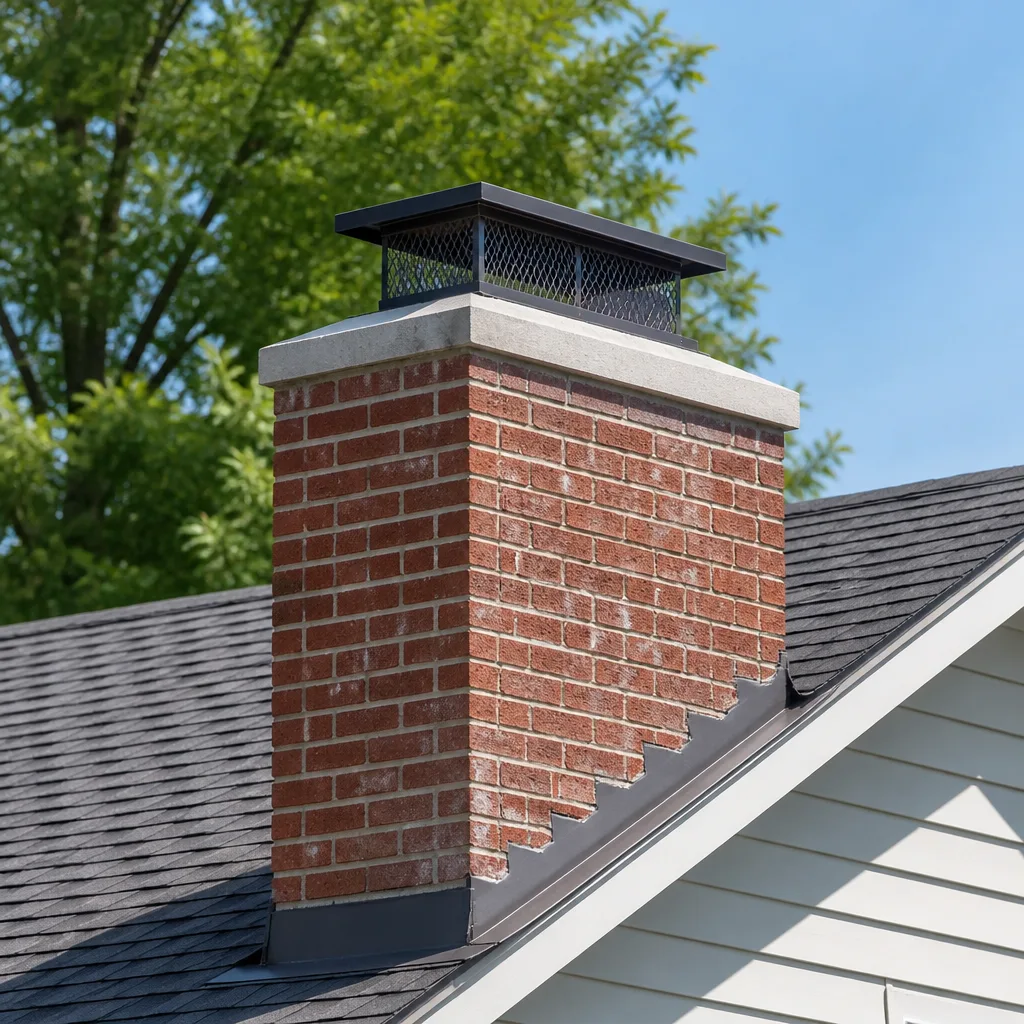 Caps & crowns
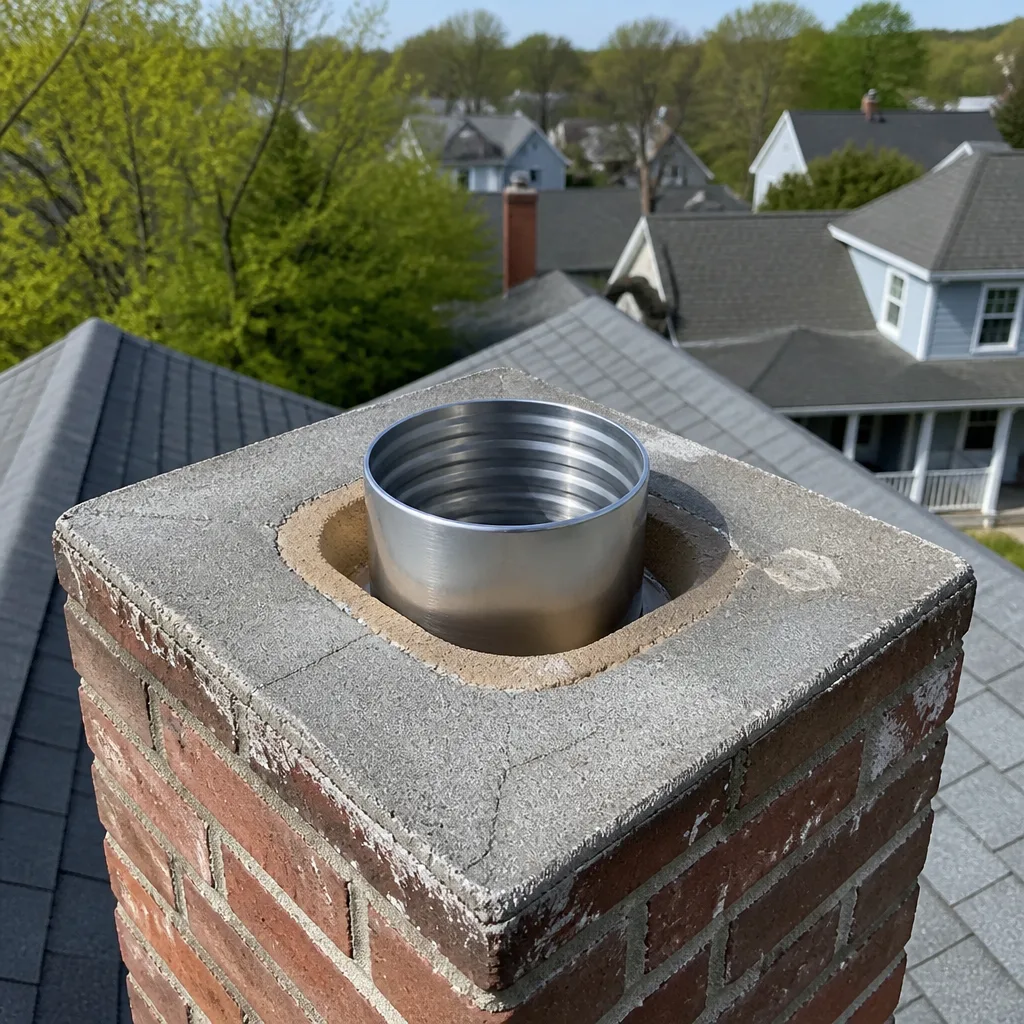 Flue relining
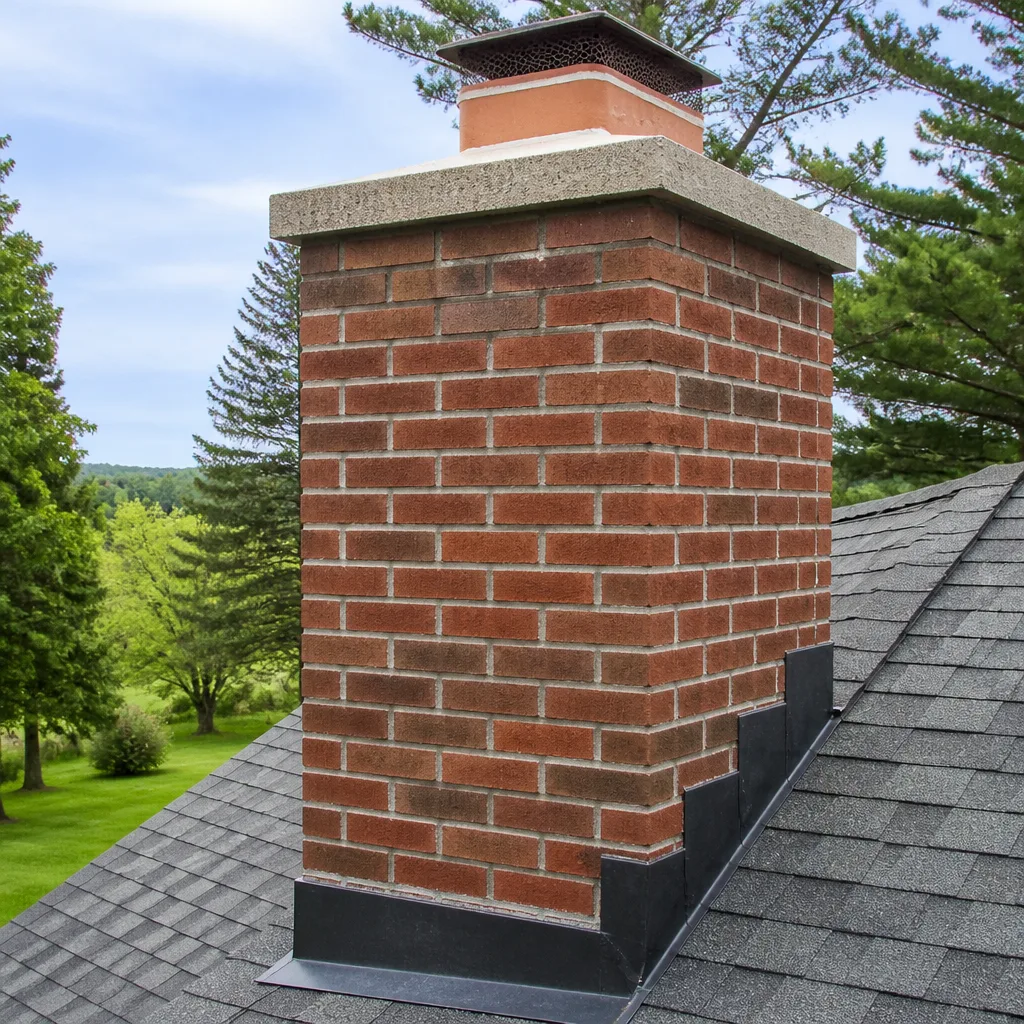 Masonry repair
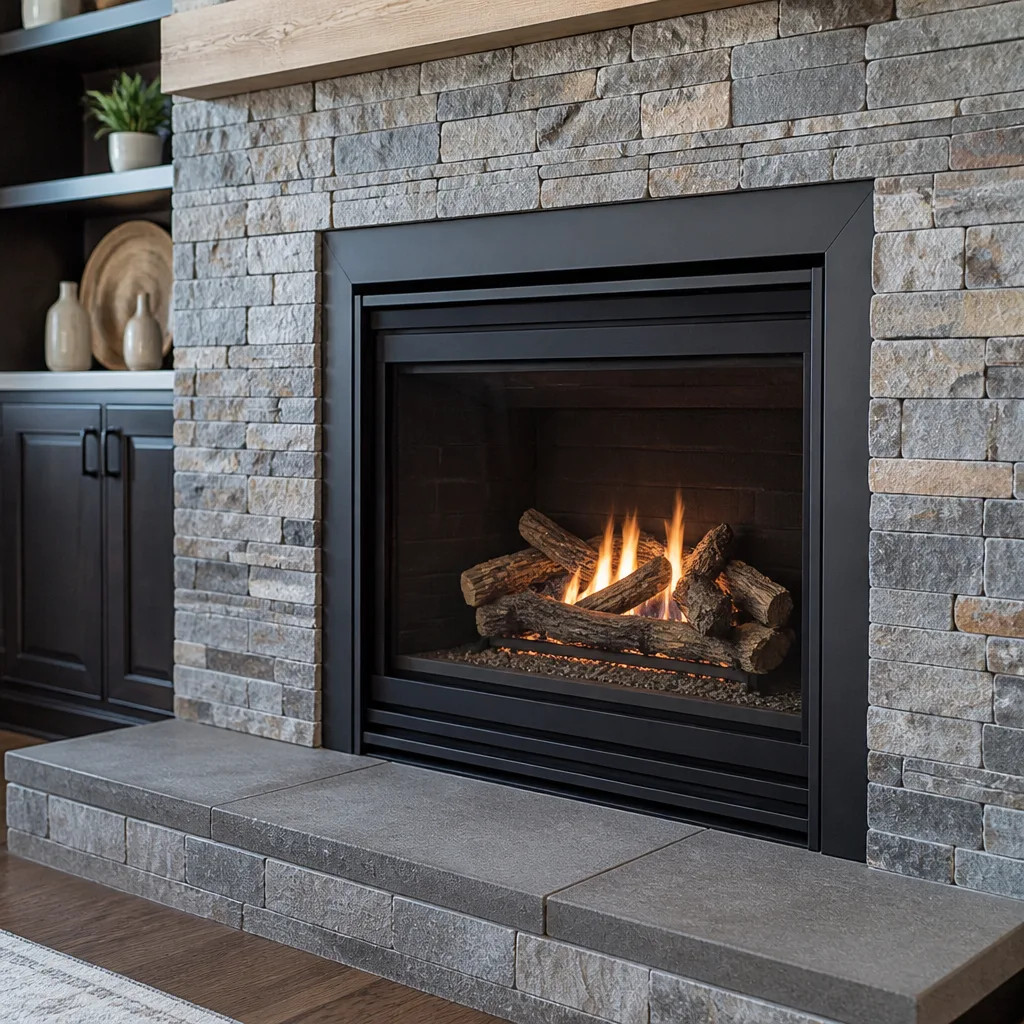 Gas fireplace service
Level 1 sweep and inspection to the NFPA 211 annual standard - flue, crown, cap, and flashing checked and photographed
Chimney sweep logs do not sweep chimneys. They loosen some creosote - which then falls where a brush and vacuum still have to collect it.
DIY vs Professional Chimney Cleaning: The West Jordan Homeowner’s Decision Guide
You can sweep your own chimney and do it reasonably well. Rod and brush kits are sold at hardware stores, the motion isn’t complicated, and plenty of West Jordan homeowners have pulled it off. Here’s the part that gets skipped: cleaning is about 20% of what an annual chimney service actually delivers. The other 80% is finding what the cleaning exposed, and that’s the piece a brush and a flashlight can’t cover. This guide maps where the real risk boundary sits, so you can make an honest call about what you’ll handle yourself and what genuinely needs trained eyes and a camera.
Quick Answer
You can safely DIY the surface cleaning of a chimney that you know is in good condition: firebox sweeping, ash removal, and brushing an accessible flue with consumer-grade rods. What you can’t replicate is the inspection, and specifically CCTV scanning of the flue interior, which is the only reliable way to catch cracked or spalled tile liners before they become a carbon monoxide path into your home. If your West Jordan home was built before 2000 and has never had a camera inspection, the sweeping is the smaller question. The scan is the decision that matters.
Styles & brands we work with
- Sweep & inspection
- Caps & crowns
- Flue relining
- Masonry repair
- Gas fireplace service
Table of Contents
- What you can realistically accomplish with a DIY chimney cleaning kit
- The inspection gap: why CCTV scanning changes the calculation
- Creosote stages and how to identify what’s in your flue
- The liability question after a chimney fire
- The hybrid approach that actually makes financial sense
- West Jordan-specific factors: housing age, climate, and burn season
- Where the safety boundary sits and why it isn’t negotiable
- Common mistakes to avoid
What Can You Realistically Accomplish With a DIY Chimney Cleaning Kit?
A consumer rod and brush kit handles about three tasks well, and it handles them more competently than most people expect. The limitations aren’t about skill. They’re about access, angle, and what the tool physically can’t see.
Here’s what a homeowner with the right equipment and a reasonable dose of care can do:
- Firebox and smoke shelf cleaning: Sweeping down the firebox walls, the damper area, and the smoke shelf behind the damper is straightforward. This is where most visible creosote and soot accumulates in a regularly used fireplace.
- Ash removal: Emptying the firebox and ash pit is labor, not expertise. Get it done cleanly and dispose of ash outside in a metal container with a lid.
- Accessible flue brushing: A round wire or poly brush on flexible rods, sized to your flue, can knock down loose soot and Stage 1 creosote from a straight flue run. You work from the top or the bottom depending on your roof access and the flue’s configuration.
What those tools physically cannot do is the second half of the sentence. A brush cannot tell you whether the tile liner behind the creosote has a hairline crack. It cannot see a gap at a tile joint three feet down. It cannot assess a flue that’s offset, and many West Jordan homes have offsets or a furnace flue tied into the same chase. The brush cleans what it touches. It doesn’t evaluate what it passed.
That’s the honest description of the DIY ceiling. It’s higher than some chimney companies would like you to believe, and lower than it needs to be for a full annual service. If you want to understand what a professional sweep looks like end to end, our chimney sweep page walks through the process step by step.
The Inspection Gap: Why CCTV Scanning Changes the Calculation
This is where the DIY conversation usually goes sideways. The cleaning is visible. The inspection is not. You can buy the rods. You can’t buy the camera, the training to read the footage, or the judgment to tell a benign surface crack from one that’s opening into the flue cavity.
A chimney video inspection uses a camera on a flexible reel that travels the full length of the flue. It records the interior in real time. A trained technician watches for:
- Spalling and delamination on clay tile: the tile face breaking away in flakes or layers, which exposes the softer body of the tile.
- Cracked tile, including hairline cracks that a flashlight from the top would never reveal.
- Offset joints and gaps where tile sections meet imperfectly, a common build pattern in mid-century construction.
- Creosote glazing at the upper flue, where condensation and cool flue gas combine to form a harder deposit than what’s in the firebox.
- Obstructions: bird nests, leaf debris, a collapsed tile shard, or a deteriorating cap that’s letting water in at the crown.
Why does this matter specifically for pre-2000 homes in West Jordan? Older construction sits in the neighborhoods that grew fastest in the 1970s, 1980s, and 1990s, and those flues have now been through several decades of heating cycles. Clay tile is durable but not immortal. Thermal cycling, moisture from a failed crown, and years of acidic condensate all take a toll, and the damage tends to show up in the interior face where nobody looks without a camera.
A cracked liner is a carbon monoxide path. That’s the sentence that should drive your decision. If the flue tile has failed, combustion gases can migrate into wall cavities or attic space instead of up the chimney. No amount of brushing addresses that, and no visible-inspection method catches it reliably. Our chimney inspection page explains the difference between Level 1, Level 2, and Level 3 inspections so you know exactly what each one includes.
Creosote Stages: How Do You Identify What’s Actually in Your Flue?
Creosote is the material that makes chimney fires possible. It forms when wood smoke cools before it exits the flue, and it deposits on the flue walls in three distinct forms. Knowing which stage you’re looking at is the single most useful self-assessment a homeowner can do, because it tells you whether DIY brushing is adequate or whether you’ve got a problem the brush can’t solve.
Stage 1: Sooty, flaky, and brush-manageable
Stage 1 creosote is a light, powdery, black or brown flaky deposit. It brushes off easily. If your flue looks like this, and you’ve been burning dry, seasoned wood with good air flow, a consumer brush will knock it down effectively. This is the scenario where DIY makes the most sense.
Stage 2: Hard, crusty, and only partially removable
Stage 2 deposits are a hardened, tar-like crust that clings to the flue wall. A brush will shave some of the surface off but won’t remove the bonded layer. Stage 2 requires chemical creosote remover, correct dwell time, and often a rotary tool to loosen what a standard brush can’t reach. This is typically beyond what a homeowner can do safely with consumer equipment, and it’s where you should call in a professional before the deposits harden further.
Stage 3: Glazed and refractory-critical
Stage 3 creosote is a glazed, shiny, hardened deposit that looks almost like a candle’s wax surface. It’s the most combustible form and the hardest to remove. It genuinely requires professional chemical treatment and mechanical removal. If you’re seeing shiny, glossy brown-black surfaces on the flue walls, stop brushing and call. The risk of igniting it is real.
You can self-assess a good chunk of this from the firebox and the flue opening. Look up past the damper with a bright light. What you see in the first few feet tells you a lot about what’s happening higher up. If it’s sooty and light, you’re probably fine to proceed with DIY. If it’s crusty, tar-hard, or glazed, that’s your signal to stop.
One more creosote factor specific to West Jordan: burn season here runs long, and it’s tempting to stretch a cord of wood into late spring. Cool, slow-burning fires with unseasoned wood produce far more creosote than a hot, clean-burning fire. If you’ve been burning green wood or damping the air intake to make a fire last, your deposit is going to be worse than average, and that shifts the DIY calculation toward professional service.
The Liability Question: What Happens After a Chimney Fire?
This is the section most homeowners don’t want to think about, and most guides skip entirely. It’s also the one that often tips the decision.
If a chimney fire occurs and you file a claim, your insurer will investigate the cause. Part of that investigation often includes reviewing maintenance records. In jurisdictions following NFPA 211 standards, which Utah follows, an annual inspection and sweeping by a qualified professional is the recognized maintenance standard. If the record shows no professional inspection in years, the insurer may reduce or deny the claim on the basis that the loss resulted from neglected maintenance.
We’re not writing this to threaten anyone into booking a service, and this isn’t a scare tactic. It’s a plain description of how claims investigations work. The homeowner who’s been diligently brushing their own flue every fall is in a very different position from the homeowner who hasn’t had the flue examined at all.
Here’s the practical version:
- Documentation matters. A dated inspection report, with photos or camera footage, is the paper trail you want if anything ever goes wrong.
- Brushing and inspecting are two different records. You can have brushed your flue and still have no inspection record. If your insurer reviews maintenance, the inspection is the document that matters most.
- A pre-sale or pre-purchase inspection in West Jordan is often a contractual requirement. Homebuyers and their agents routinely request a Level 2 inspection before closing. Sellers who can produce one don’t delay closing.
If you’re in the middle of a real estate transaction, or you’re not sure whether your current maintenance record is adequate, our team can walk through what’s typical. Call (866) 947-9321 for a free estimate.
The Hybrid Approach: When DIY Maintenance and Professional Inspection Split the Job
The honest middle path is this: do your own between-season maintenance brushing, and schedule a professional inspection anyway, even in years when you skip the professional sweep. This is the arrangement that makes financial sense without compromising safety, and it’s what we’d recommend to a friend.
Here’s how a hybrid year might look:
- End of burn season: After your last fire of the year, do a basic DIY firebox and ash cleaning. Clear the firebox, sweep the smoke shelf, and get the ash out. This keeps the firebox cleaner through the off season and reduces the deposit that builds up before next fall.
- Late summer or early fall, before burn season: Schedule a professional Level 2 inspection, including CCTV camera scanning of the flue. This is the inspection that catches liner issues, offset joint gaps, and deposit stages the DIY brush can’t see. Many West Jordan residents do this in late August or September, before the first cold snap sends everyone to the phone at once.
- Between inspections: Do a light DIY brushing mid-season if you’ve burned heavily. This is the “maintenance brushing” that keeps your deposit from climbing past Stage 1 if you’re burning cleanly.
The logic holds up. The inspection is the service that has no DIY equivalent, and it’s the one that protects the flue and your insurance position. The sweeping is the cheaper, more accessible piece, and you can reasonably do much of it yourself. Splitting the two keeps the cost of professional service focused where it matters.
There’s one exception. If your inspection reveals a liner problem, a structural issue, or Stage 2 – 3 creosote, that’s when you cross from DIY into specialist territory. A cracked flue liner, a failed crown, or a damaged cap isn’t a DIY project. HeatShield liner restoration can extend the life of a compromised flue without the cost of a full liner tear-out, and it’s a capability that a sweep-only operation can’t offer. Our chimney repair page walks through the repair options for liner damage, masonry issues, and cap and crown failures so you can see where the boundary sits between replacement and restoration.
West Jordan-Specific Factors: Housing Age, Climate, and Burn Season
A few local conditions shape the DIY-vs-professional decision in West Jordan specifically, and it’s worth naming them.
Housing age is the big one. West Jordan grew substantially through the 1970s, 1980s, and 1990s, which means a large share of the housing stock has clay tile flues that have now seen several decades of heating cycles. Those tiles are approachable for DIY brushing but not for camera inspection, and the age profile raises the odds that a pro scan will find something worth knowing about. If your home predates 2000 and you don’t have an inspection on file, the scan is the priority item on your list.
The burn season is long. Inland valley winters mean fires from October through April in a typical year, so the flue sees more cycles than a homeowner in a milder climate. Creosote accumulation climbs with total burn hours, not with the calendar. A long season means more frequent brushing is required, which pushes some homeowners toward the hybrid approach simply because the DIY interval needs to be shorter.
Dry, arid climate and low ambient humidity affect masonry and mortar over time. Mortar joints on the crown and chimney exterior can dry-crack, which lets water into the chimney chase during winter precipitation. Once water is inside the flue, spalling and tile damage follow. This is a failure chain that a camera inspection catches early and a brush doesn’t catch at all. Crown and cap condition is worth checking every fall.
Wood quality varies widely. Many West Jordan homeowners burn wood from nearby sources, and the moisture content matters enormously for creosote. If you’re not sure your wood is seasoned, assume your deposit is heavier than average and consider professional sweeping for that season.
Air quality restrictions during inversion season mean burn habits here aren’t purely a matter of preference. Shortening burn periods or cutting back on fires during poor-air days reduces deposits but also produces cooler flue gases, which can worsen creosote. It’s worth knowing how your specific burning pattern has played out in the flue. That’s what the inspection tells you.
Where the Safety Boundary Sits and Why It Isn’t Negotiable
We’re going to be direct about this because it matters. Chimney cleaning itself is a low-risk task when done correctly, but the components people encounter while trying to go further are genuinely dangerous, and we don’t recommend DIY access to those areas.
The specific hazards:
- Roof access. Getting to the chimney on a sloped West Jordan roof, especially in wet or icy conditions, is the second-most common cause of DIY chimney injuries. A brush isn’t worth a fall. If you’re working from the roof, take it seriously or don’t go up.
- Severely deteriorated flues. Brushing a flue with badly spalled or cracked tile can dislodge a shard or open a fracture further. If a camera inspection has never been done, you don’t know whether the flue is safe to brush.
- Stage 3 creosote. Chemical removal of glazed creosote involves caustic application and dwell time. Done wrong, it can ignite. This is professional territory.
- Carbon monoxide risk. A flawed flue tile, a compromised liner, or a blocked flue allows CO to enter the home. Every home with a fuel-burning appliance or fireplace should have working CO alarms on each level and near sleeping areas. No DIY brushing addresses a CO problem.
- Gas appliance vents and furnace flues. Do not straddle the flue servicing your gas furnace or water heater with a fireplace brush. Different appliance, different requirements.
Our point isn’t that you should never touch your chimney. It’s that the safety boundary sits at the inspection and structural assessment, and the specific danger zones – deteriorated liner, Stage 3 creosote, and roof access – are where a trained professional takes over.
Every professional we work with is licensed and insured as their state requires, and camera inspection is included in every visit. If you’d rather have someone look first and decide afterwards, that’s a reasonable way to proceed. Call (866) 947-9321 for a free estimate.
What Should You Actually Check Before You Burn Again?
A five-point pre-season check takes about ten minutes and catches most of what warrants a professional call. It’s also the checklist a chimney professional runs through, minus the camera work.
- Look up the flue with a bright light. Sooty and flaky is fine. Crusty, tar-hard, or glazed means call.
- Check the damper. It should open and close smoothly. A stuck damper or one that won’t seal is a fireplace repair issue, and our fireplace repair team handles those.
- Look at the cap and crown from the ground. The cap should be intact, screened, and firmly seated. The crown should be uncracked and sloped so water runs off. If you’re seeing damage from ground level, it’s worse up close.
- Test your carbon monoxide alarms. Replace the batteries, test each alarm, and confirm you have coverage on every level of the home.
- Check your wood. Seasoned wood is lighter, has visible cracking at the ends, and sounds hollow when you strike two pieces together. Green wood produces creosote.
If any of those checks signals a problem, or if it’s been more than a year since your last professional inspection, that’s the trigger. The best time to schedule an inspection in West Jordan is before burn season, not during the first cold week when everyone else is calling.
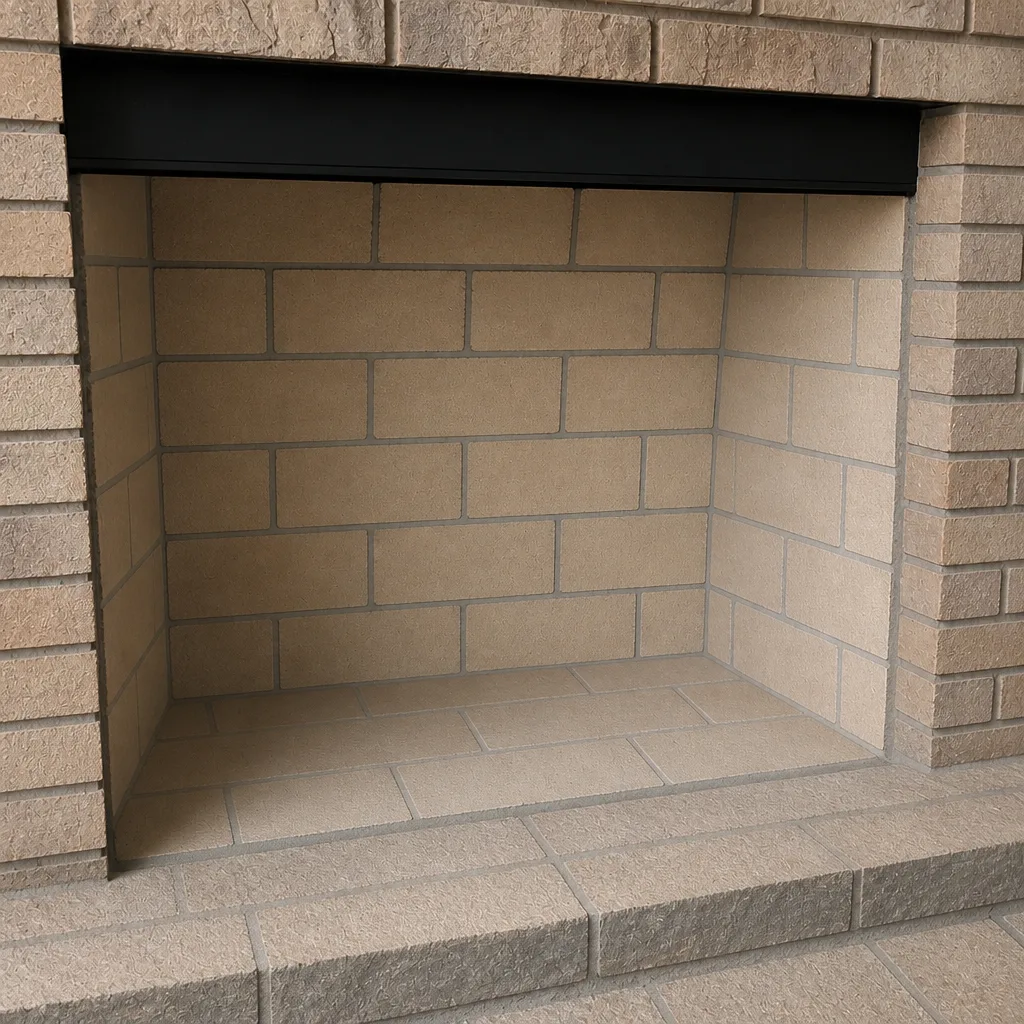
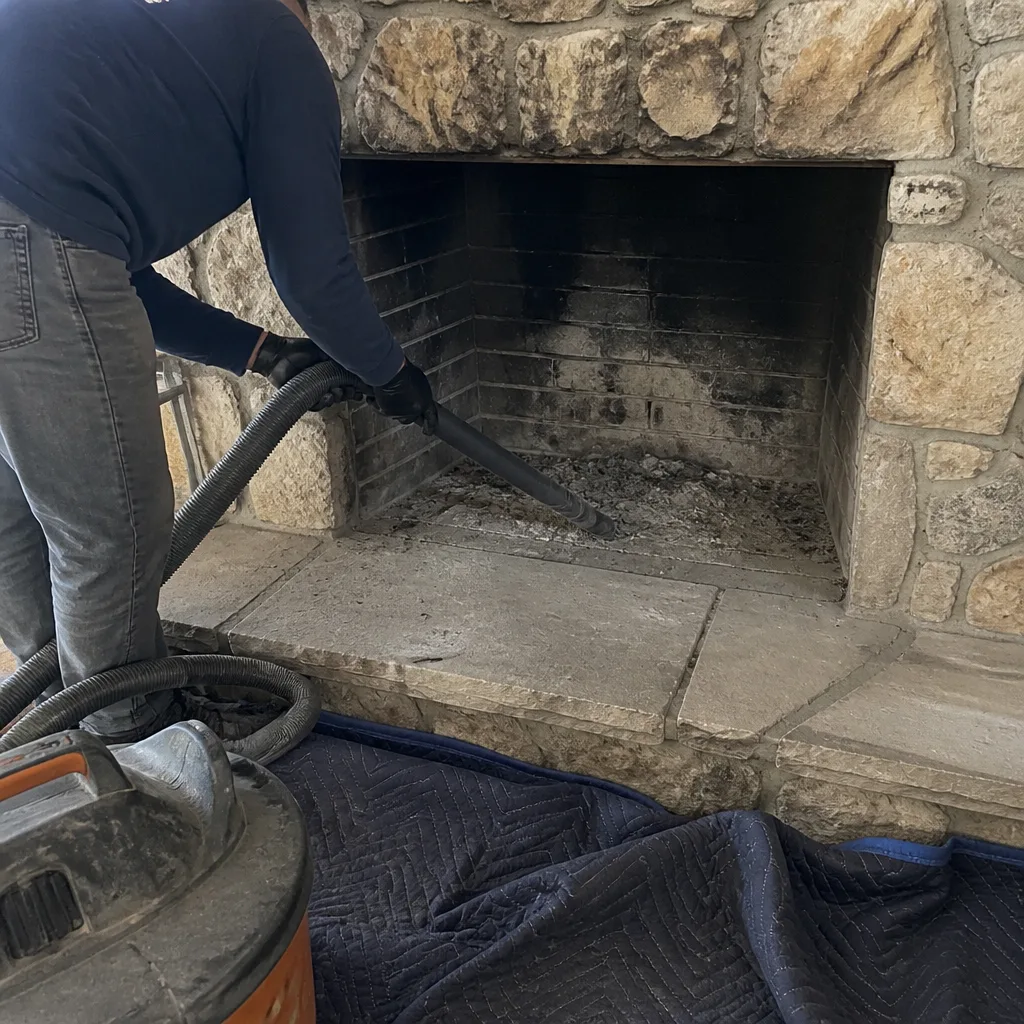
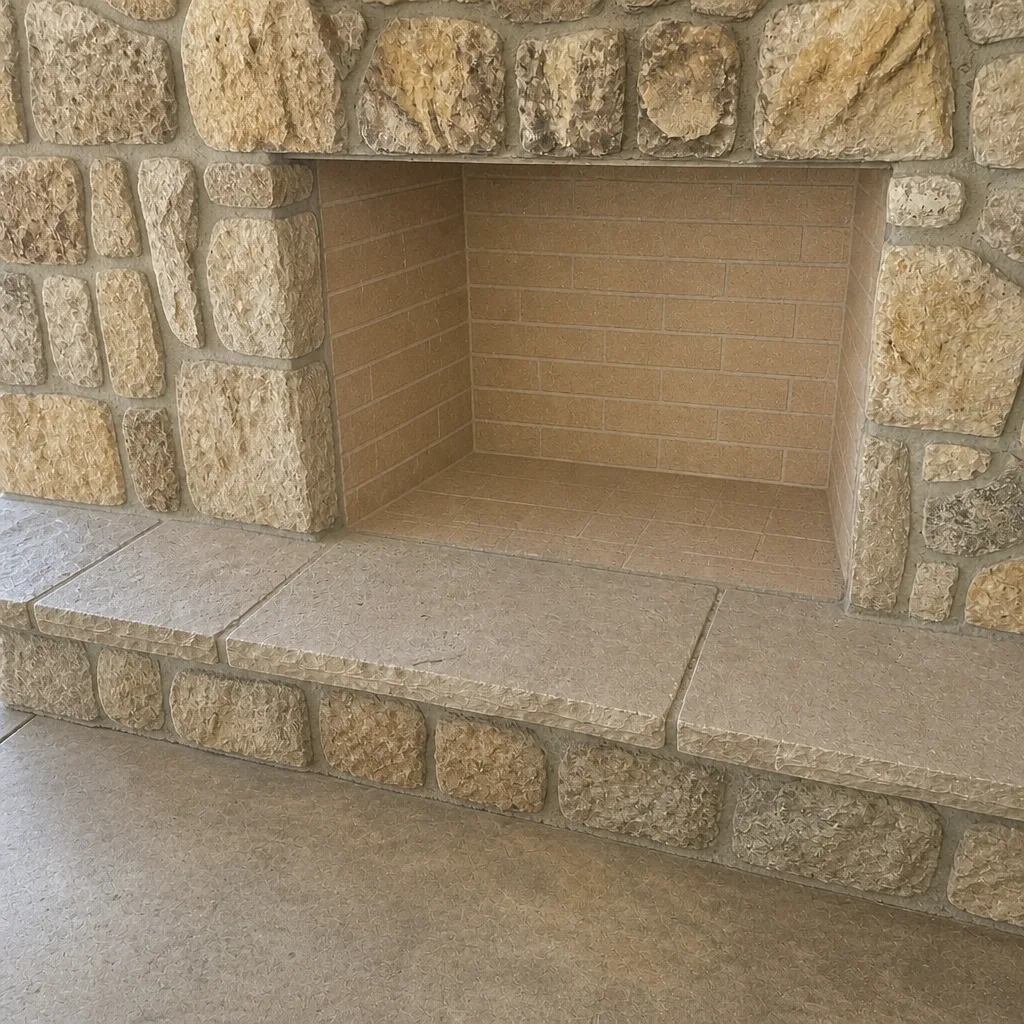
See the difference
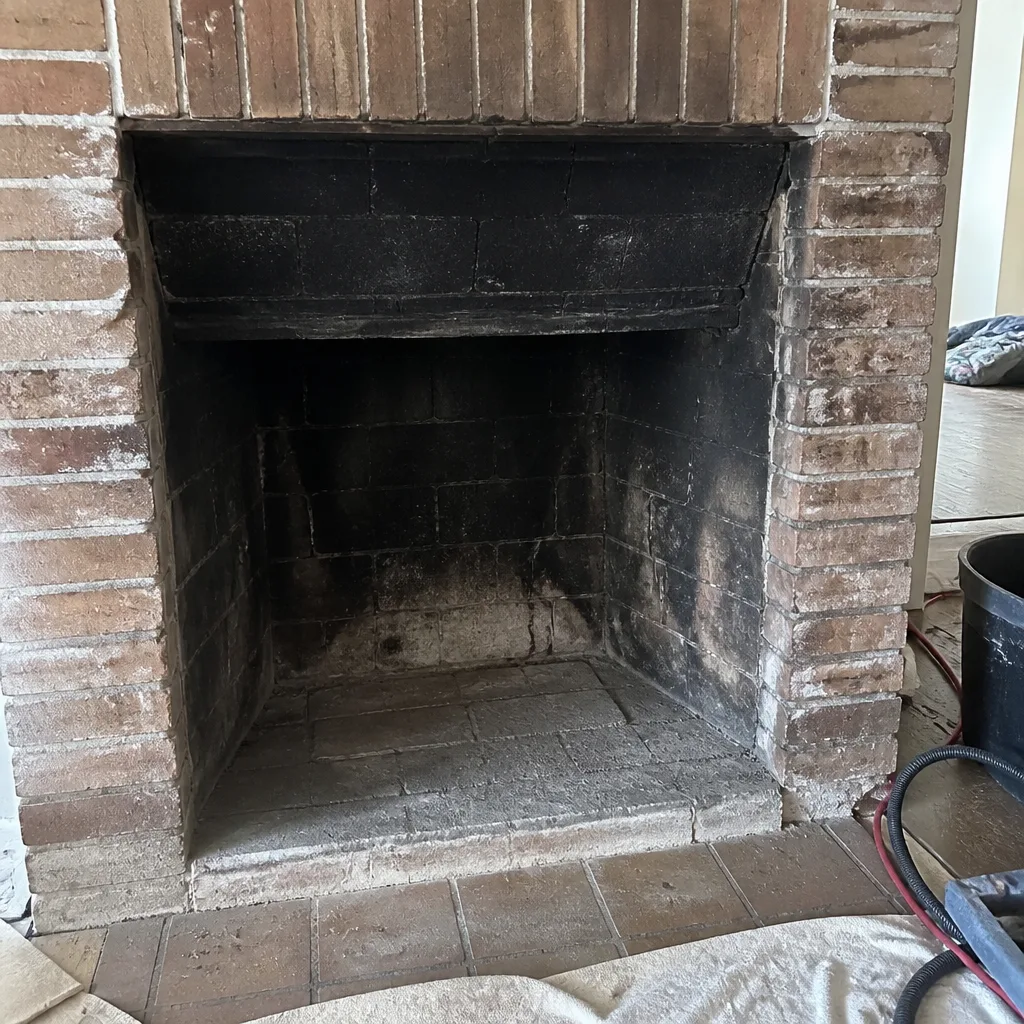 Before
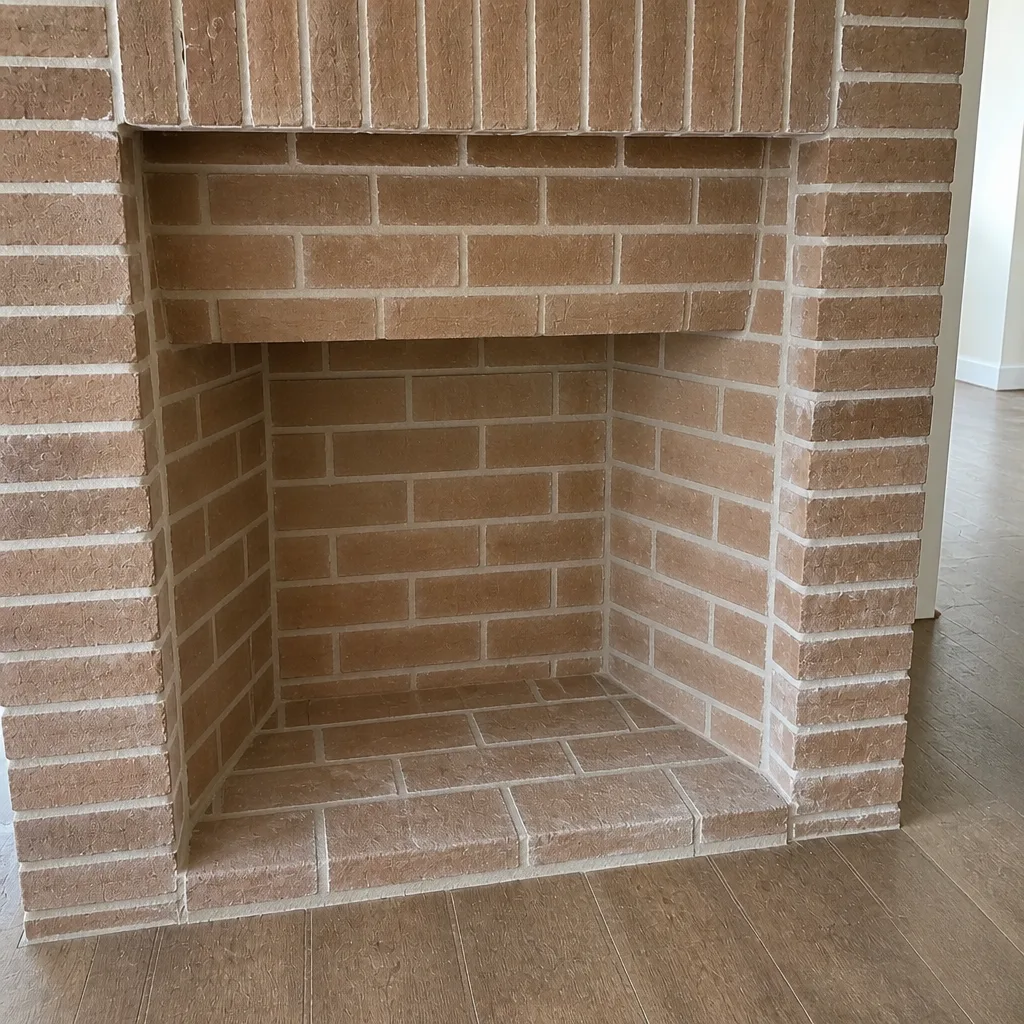 After
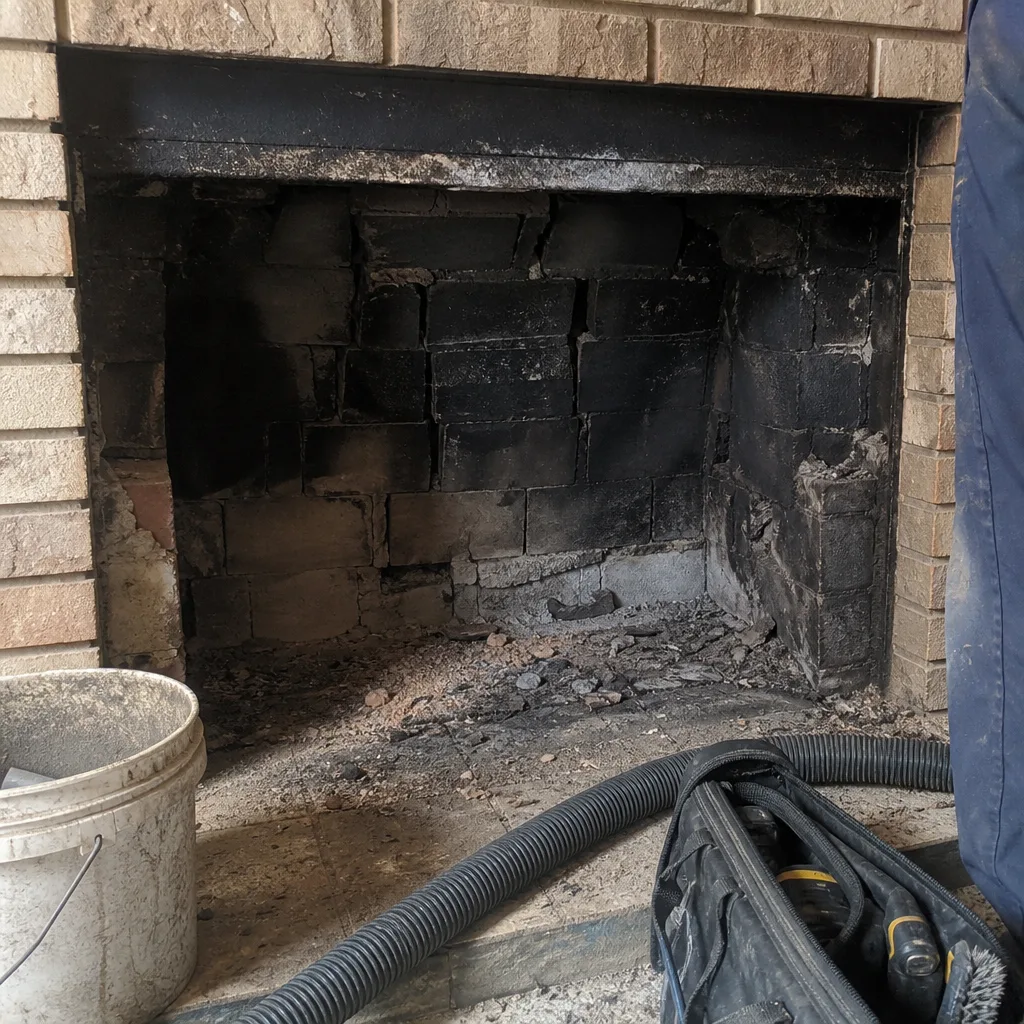 Before
 After
 Before
 After
How Does the Cost Compare When You Add It Up Honestly?
A chimney professional typically charges a range for a standard sweep and inspection service, and the cost depends on your flue configuration, accessibility, and whether you need additional services like camera inspection or chemical creosote removal. The written estimate sets the final price.
DIY runs lower on the front end, but the numbers shift when you account for what a DIY sweep skips. A rod and brush kit costs a modest amount and lasts years, so the DIY cost per year is small. But the inspection the DIY sweep skips is the one that identifies problems early, and the cost difference between a HeatShield liner restoration and a full liner replacement, or between a caught tile crack and a chimney fire, tends to be larger than the annual difference between DIY and professional. The written estimate for any repair work reflects the specific job, and we won’t recommend anything that isn’t supported by what the camera shows. Call (866) 947-9321 for a free estimate.
Common Mistakes to Avoid
- Assuming a brush means a cleaning. Homeowners often brush the visible flue, feel satisfied, and skip the inspection. The brush doesn’t see broken tile, so a “clean” flue can still have a serious liner problem.
- Burning unseasoned wood in a West Jordan winter. Green wood and cool burns produce far more creosote. If your fire sizzles, the wood is wet, and your deposit is worse than it needs to be.
- Damping down the fire to make it last. Cutting the air supply to stretch a burn creates exactly the cool-smoke conditions that form glazed creosote. Burn hot and clean, not slow and smoky.
- Skipping the camera inspection because the flue looks fine from the top. Hairline liner cracks and offset joint gaps are invisible from above. A pre-2000 home without an inspection on file is the classic case where the missing inspection is the problem.
- Ignoring the crown and cap. A cracked crown lets water into the chase and drives tile spalling. Cap and crown condition is easy to check from the ground and often overlooked.
- Waiting until the first cold snap to book. West Jordan appointments fill quickly once burn season starts. Late summer is the calmer window, and you get the same service without the wait.
- Not keeping any record. Brush away – just keep a dated note of what you did and when. If a claim ever comes up, or you’re selling the house, the paper trail is what supports you.
When to Call a Professional
Call a professional if any of these describe your situation: your home was built before 2000 and has never had a camera inspection; you’re seeing crusty or glazed creosote on the flue walls; your damper, cap, or crown is damaged; you’ve had a chimney fire or a CO alarm activation; you’re within 90 days of a real estate closing; or it’s been more than a year since the flue was inspected at all. Any one of these is enough. Multiple is a priority. We work on the whole system – not just what’s visible from the living room – and our team sees the full picture from pre-season inspection through liner restoration, cap installation, and structural repair. West Jordan Chimney Sweep offers free estimates in West Jordan. Call (866) 947-9321. We answer 24/7. Fast dispatch from 7am to 7pm, Sunday through Friday.
Frequently Asked Questions
A standard chimney sweep and inspection typically falls in a range that depends on your flue configuration, accessibility, and whether camera scanning is included. The written estimate sets the final price. Call (866) 947-9321 for an exact quote – estimates are free.
You can do a competent surface cleaning of a chimney you know is in good condition, and that’s a legitimate between-season task. What you can’t do is inspect the flue interior for cracked tile, offset joints, or Stage 2 – 3 creosote, because that requires a CCTV camera and the training to read the footage. For homes with a strong flue, DIY brushing is fine. For homes without a recent inspection, the camera scan is the piece worth scheduling. Call (866) 947-9321 to book one – estimates are free.
Not always. HeatShield liner restoration can address a cracked or deteriorated clay flue without a full liner tear-out, and that option is worth asking about before you proceed straight to replacement. The honest answer depends on what the camera shows. We don’t recommend liner work without camera evidence a homeowner can see for themselves, and we’ll tell you plainly when a repair can safely wait. Call (866) 947-9321 for an exact quote – estimates are free.
NFPA 211 recommends inspecting the flue annually and sweeping when creosote accumulation reaches a quarter-inch or greater. In West Jordan, where the burn season runs October through April, that typically means an annual inspection with a sweep as needed, and more frequent brushing for homes with heavy burn rates or unseasoned wood. Call (866) 947-9321 for an exact quote – estimates are free.
Skipping the annual inspection lets creosote accumulate and lets a liner problem go unnoticed, which increases chimney fire risk and allows carbon monoxide a path into the home through a failed tile. It also weakens your documentation if you ever file an insurance claim. The risk is real, but the practical response is a call, not a panic. Call (866) 947-9321 for an exact quote – estimates are free.
Yes, and this is often the smartest approach. A lot of West Jordan homeowners do their own between-season brushing and schedule a professional inspection once a year, especially before burn season. This keeps the cost down while preserving the inspection record and the camera scan that the DIY sweep can’t replicate. Call (866) 947-9321 for an exact quote – estimates are free.
The Bottom Line
DIY chimney cleaning is reasonable in a specific, narrow lane: firebox cleaning, ash removal, and light brushing of a flue you know is in good shape. That lane is real, and you don’t need to feel bad about using it. The problem is what happens when homeowners assume “clean” means “safe,” because a brush washes past the exact failure points a camera would catch. The decision really comes down to one question: is the inspection covered? If you have a recent camera inspection on file, DIY brushing between services is a solid arrangement. If you don’t, book the scan before you start brushing. One specialist from inspection through repair – no handoffs, no gaps in accountability – is the way West Jordan Chimney Sweep handles the full arc of chimney care. If you’d like to look before you decide, call (866) 947-9321. We answer 24/7. Fast dispatch from 7am to 7pm, Sunday through Friday.
Written by the team at West Jordan Chimney Sweep.